In the high-stakes arena of modern serious drifting, victory is no longer exclusively a result of raw engine power or behind-the-wheel bravado. Rather, it has become a intricate discipline that demands a painstaking blend of selecting a inherently capable car, outfitting it with the most precise drift-spec components, and, most importantly, comprehending its real-time behavior on the track through advanced vehicle dynamics analysis tools. This comprehensive guide will serve as your roadmap starting from the very first idea of a project car right through to the final telemetry-optimized tweaks that transform a powerful vehicle into a repeatable champion. We will thoroughly explore the precise engineering of vehicle alignment optimization, illustrating how a modern suspension tuning tool like precise measurement hardware eradicates assumptions and provides exceptional clarity into your car's true behavior.
The cornerstone of any exceptional drift machine is, undoubtedly, the platform itself. A select group of vehicles have achieved legendary standing within the international drifting community due to their built-in balance, robust construction, and the enormous range of performance parts available. Selecting the optimal car is the primary and most crucial decision a driver will make. For instance, the BMW E36 is widely regarded as one of the greatest all-around drift platforms of the modern era. Its excellent evenly distributed mass, alongside a RWD configuration and extremely reliable six-cylinder motors, establishes a platform that is both easy to handle for newcomers and incredibly capable in the control of a professional competitor. The successor of this philosophy, the BMW E46 platform, refines these qualities with a more sophisticated frame, increased wheel track for greater stability, and even more turning capability straight from the manufacturer. Another dominant contender in the pro arena is the C6 generation Corvette.
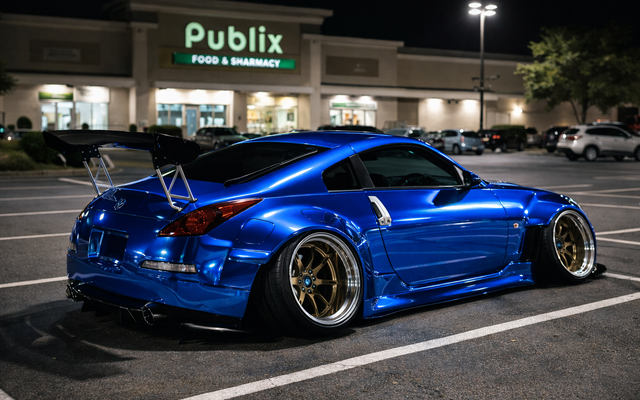
This V8-powered performance car offers a distinctive combination of strengths to the drifting discipline, including a lightweight aluminium frame, a rear-mounted gearbox and differential unit that helps create an ideal balance, and the tremendous thrust of a large-displacement GM LS engine. This fusion makes it an utter monster on track, able of initiating and sustaining extended drifts with apparently easy application of acceleration. For those looking for remarkable bang-for-the-buck, the Nissan 350Z rises above as a prime example. It arrives from the factory with a robust chassis, a decent OEM limited-slip differential, and the responsive VQ series engine that provides ample horsepower and torque for mastering and progressing in the sport. Its newer version, the Nissan Z34, offers additional advancements in chassis stiffness, suspension design, and peak engine output, solidifying its status as a favorite choice among competitive pilots. Other historic vehicles that deserve consideration encompass the agile unique Mazda FC RX-7, the ubiquitous S13 Silvia/240SX, the American Ford SN95, the modern BMW E90, and the tiny yet surprisingly engaging and forgiving Mazda MX-5. All of these platforms offers a distinct array of traits, complexities, and possibilities, but they all possess the basic components essential to serve as a serious sliding vehicle.
However, picking the optimal platform is just the starting point. To access the complete performance of every of these machines, major changes to the steering geometry and chassis control systems are utterly mandatory. This is where the realm of performance drift-spec hardware enters critical view. The single most transformative upgrade for a dedicated competition vehicle is the integration of a drift-spec steering angle kit. These advanced kits, such as those developed by performance brands like specialist manufacturers, are engineered to dramatically increase the chassis's possible turning lock. A factory street car is highly constrained in how far its steering tires can turn, a design limitation for daily driving. In drifting, conversely, maximum opposite lock is constantly needed to control and maintain a angle. An steering kit replaces the stock uprights, tie rods, and potentially suspension arms with components that permit the front tires to achieve steering lock beyond 70 or even 80 degrees, as opposed to a typical OEM limit of around 40 to 50 degrees.
This vastly expanded steering angle offers the pilot with significantly greater control during a slide, making it much more straightforward to initiate a drift, maintain it through a sweeping corner, and switch seamlessly from one side to another. The difference in controllability is truly revolutionary. Paired with a correctly specified modification is the equally critical modification to the car's spring and damper setup. Off-the-shelf or even premium sport dampers are simply not designed for the unique and harsh requirements of sliding. A drift-spec system of coilovers is paramount. These specialized coilovers feature specific damping rates and spring stiffness that are tuned for the rapid mass transition that is typical of aggressive driving. When a operator begins a angle, the chassis's inertia is shifted violently to the front of the corner. Proper drift-spec coilovers manage this shift in a controllable fashion, permitting the vehicle to find its balance promptly and providing the pilot precise feel through the wheel and seat. They also allow for accurate tuning of ground clearance, rebound and compression stiffness, and corner weighting, which are all integral elements of optimizing the car's behavior to a particular track or driving style. Together, a top-tier angle modification system and a properly selected system of drift-spec coilovers are the undeniable mechanical foundation upon which all future optimization is built.
Once the core parts is in place, the next vital step in the project is the meticulous setting of the car's alignment. This is the world of chassis dynamics adjustment, a procedure that can seem overwhelmingly complex to the newcomer but is, in reality, the defining factor to turning a assembly of fast pieces into a cohesive and controllable vehicle. The most discussed parameter of suspension geometry for oversteer is certainly camber. Wheel camber is the angle of the rim in relation to the vertical plane when viewed from the front-on of the vehicle. If the top of the tire is tilted towards the chassis, this is called inward tilt. For oversteer driving, an inward tilt on the steering wheels is widely employed and is considered necessary. The purpose is deeply tied to vehicle dynamics.
When a vehicle is cornering at limit sideways angles, the chassis rolls toward the outer of the bend. This chassis roll causes the outside steering tire to reduce its optimal grip area with the tarmac. By introducing an inward tilt, the tire is pre-angled to counteract this tilt. As the chassis rolls into the bend, the outside front tire becomes more upright against the asphalt, increasing its grip at the exact moment when it is absolutely essential for directional command. Commonly, front camber settings for a competition drift car vary from approximately -3 degrees to as much as -5 degrees or even greater, based on the details of the vehicle geometry, tire selection, and driver preference. The rear axle wheels also employ negative camber, but the values are generally more conservative and more nuanced than the front. Too much negative camber at the back can cause the vehicle to excessively loose and difficult to predict on power input, as it diminishes the available contact patch of the driving tires during linear power delivery. Hence, rear angles are often in the ballpark of -1 degree to -3 degrees, achieving a careful equilibrium between providing sufficient side bite to assist in initiating and sustaining the drift while also preserving usable grip for exiting the corner. alignment is just one part of the more complex alignment equation, which furthermore involves toe, caster angle, and suspension-induced steering correction.
Toe angle describes the orientation of the wheels as seen from a bird's-eye view. Positive toe means the front edges of the tires are nearer together than the trailing edges, while toe-out means the reverse. For oversteer, a modest amount of front axle toe-out is commonly run to improve the turn-in steering reaction, making the vehicle feel more agile and ready to start a drift. Rear axle toe angle is generally set to neutral or a incredibly minute amount of positive toe to foster stability under acceleration. Caster is the forward or backwards angle of the kingpin axis when looked at from the side-on of the car. Increased caster increases steering feel and high-speed stability, and it furthermore adds to camber effect during turning, which is very advantageous. Adjusting these parameters is a detailed dance where a modification to one setting can and will influence the remaining parameters. The conventional approach for tuning a car's alignment for sliding has for a long time been a tedious process of trial and error. A tuner or crew would apply a change based on a hunch, test the vehicle on track, rely on the operator's personal feel and impressions, and then apply a further adjustment. This process would continue over and over until the chassis felt "right" or the available practice session ran out. This system is not only incredibly wasteful in terms of hours and resources, but it is furthermore fundamentally flawed.
Driver feel is a famously inconsistent data source, affected by numerous elements such as tiredness, changing track surfaces, temperature, and merely the mood of the operator on that particular run. What feels "oversteery" on one pass might feel "understeery" on the subsequent run, causing conflicting data and ineffective tweaks. This long-standing limitation in vehicle dynamics optimization is precisely where contemporary telemetry systems has intervened to transform the methodology.
The development and integration of sophisticated drift telemetry software has brought about a new age for tuning and optimizing professional drift cars. This new generation of systems, represented by cutting-edge products like data acquisition tools, function by physically recording the actual physical movement of the chassis as it is being driven on the circuit. As opposed to using subjective impression, these devices acquire objective information on essential factors such as shock absorber movement, corner velocities, acceleration forces, steering angle, and accelerator and brake pedal input. This acquired data stream is then processed by advanced algorithms that can plot and decode the information in a clear manner. For the first time, tuners and crews can visualize specifically what the car is doing at each point of a lap. This function revolutionizes the complete chassis setup process. Consider the particular goal of setting the front axle negative camber for a particular vehicle. As an alternative to introducing a adjustment from -3 degrees to -3.5 degrees and then driving multiple passes to try and "perceive" a change, a vehicle dynamics tool can provide real-time and definitive data. The software can show in a chart how the wheel's grip is performing during the critical moments of a slide: turn-in, mid-corner, and changing direction. It car suspension tuning can show if the current value is enabling the steering tire to maintain optimal contact or if the compound is working inefficiently on its outside edge.
The system can then suggest fact-based suggestions for adjustment. Perhaps the data reveals that the outside front tire is still overloading its sidewall at -3.5 degrees of negative camber, indicating that even more negative camber, say -4 degrees, might be warranted. On the other hand, the data might show that the tread is not coming up to heat or that the inside edge is wearing unevenly, which could indicate that there is too much angle and a small reduction back to -3.2 degrees would be more ideal. This level of granularity and useful insight was completely unattainable in the era of exclusively manual tuning.
The effect of utilizing a dedicated suspension tuning tool extends much further than just setting camber angles. It becomes an priceless coilover setup tips that is specific to your specific chassis. When fine-tuning the shock absorber values on your coilovers, rather than relying on imprecise advice or mimicking another car's settings, you can employ the software to see how the car is behaving in relation to your tweaks. The tool can graph the suspension travel data over a lap, showing if the coilovers are controlling the chassis motion effectively or if they are permitting the vehicle to bounce uncontrollably after a transition. It can assist in pinpointing issues like hitting the bump stops or excessive extension, enabling you to apply data-backed decisions to preload settings, rebound/compression rates, or ground clearance. This approach applies just as well to the intricate art of car alignment tuning. Beyond camber angle, the software can provide data into how adjustments to toe settings and caster are affecting the chassis's stability during different phases of a slide. For instance, it can allow you to determine the ideal amount of front toe out for your individual steering setup and piloting technique by showing the response time of car alignment tuning turn-in response and the stability of the chassis at maximum lock. This turns the software an exceptionally useful drift suspension tuning guide that is actively informed by the real-world behavior of your personal chassis on the tarmac. It elevates the complete project from a subjective skill into a scientific engineering exercise.
Furthermore, the utility of a system like GripDial is not limited to experienced teams with large budgets. For the grassroots driver, it serves as an amazing equalizer. It effectively provides the tuner with the analysis of a expert suspension specialist without needing the corresponding overhead. It drastically shortens the development time by giving unambiguous answers to questions that would normally take countless track days of experimentation to answer. A builder can learn how their specific vehicle reacts to various inputs, building a more intuitive knowledge of car control in the process. It furthermore opens up advanced chassis dynamics concepts, permitting all drivers with the desire to optimize their car to accomplish it in a systematic and productive manner. This is notably valuable in a sport like oversteer competition, where tuning knowledge has car alignment tuning traditionally been a tightly held commodity among professional crews. In the modern era, that capability can be in the hands of every dedicated builder.
In summary, the journey to building and optimizing the perfect competitive drift machine is a multi-faceted project that perfectly integrates time-honored mechanical wisdom with cutting-edge telemetry tools. It commences with the wise choice of a legendary car, then enhanced by the application of essential performance hardware like maximum-angle steering angle kits and properly selected drift-spec suspension units. The process then progresses into the precision realm of chassis dynamics adjustment, where parameters like negative camber, toe, and caster are precisely adjusted to suit the chassis's new geometry and the driver's individual needs. Finally, and what really differentiates the contemporary approach from the past, is the adoption of a powerful vehicle dynamics tool. This tool removes the approximation and inefficiency of solely seat-of-the-pants setup by delivering quantifiable, actual data on how the car is really behaving. It functions as an indispensable engineering partner, a comprehensive alignment optimization handbook, and a all-in-one vehicle dynamics tool. In unison, this integrated philosophy leads to that all aspect of the competition vehicle—from the choice of the chassis to the last adjustment on the suspension—is perfected for ultimate success on the circuit. It represents the complete progression of the sport of sliding, bridging mechanical pilot talent with surgical vehicle setup to create the most effective cars possible.